

The way I used to teach Claude Shannon’s Mathematical Theory of Communication long ago is this: if someone slips a card with a heart on it under your dorm room door on February 14, it means something, but it may not mean a lot. People expect cards with hearts slipped under their doors on Valentine’s Day. But if someone slipped a card with a heart under your door on January 14, it would mean more!
When you pick up the card in February, the uncertainty about meaning is reduced when you remember it is the 14th. You may have gone to bed with a certain expectation about notes, a conditional distribution that may or may not have taken Valentine’s Day into account. If you did, then on February 14, p(love note | date) is already high, so the note’s arrival collapses very little uncertainty. Few bits move. But on January 14, a card under your door is a low-probability event under the receiver’s distribution, its surprisal (−log p) is large, and the receiver is forced into a significant posterior update. Something occasioned the card, and the occasion is not the calendar. Information is carried by the improbability. Probability on February 14 is manufactured by the date; the improbability on January 14 is not exactly manufactured by a date but it is not unrelated to the date.
All of this to say: same channel (under the door), same words (card with a heart), completely different information, or bit count.
All of this went through my head on Saturday, July 4, with the scores if not hundreds of patriotic posts that one doesn’t want to completely ignore coming across my X feed. The calendar context is shared by every poster and reader, so everybody’s conditional distribution concentrates on patriotic content before opening the app. The per-token perplexity of a patriotic post on July 4 is, for any reader, near the floor. In compression terms, the post is maximally compressible.
Shannon estimated ordinary English at roughly 50% redundant in the 1948 paper; his 1951 prediction experiments pushed the estimate toward 75%. My July 4 feed was 100% redundant, even including the newly canonical dissenting variant (Frederick Douglass “What to the Slave,” etc.). H(post | date, author) approaches zero for almost every account.
It may be that July 4 is at X’s annual entropy minimum, lower even than Christmas and New Year’s and Easter and certainly than Halloween. World Cup posting entropy is higher than expected, at least for now. July 4 posting entropy is measurable, in principle, if you look at topic-distribution entropy of posts by calendar day, or mean per-token perplexity of posts scored by a language model. That would show the July 4 trough.1
What does this mean? First, that patriotic posts on X (or elsewhere) are not in fact transmitting on the channel where they appear. A message a receiver can easily predict carries no bits about the sender’s beliefs, or at least beliefs about the U.S.A., whatever the post says. What the patriotic message transmits is roughly one bit of participation and belief in participation. The post confirms the account is live, that the poster is observing the convention of patriotic posts on July 4.2 Like the congregation’s “amen” at the end of a sermon, the post transmits nothing semantically beyond a commitment to membership and simultaneity,3 which Diogenes famously eschews.
So, on a day when so much is fixed, say Valentine’s Day or Independence Day, the best information exists in deviations, so a good X reader should allocate attention the way a decoder allocates bits: entirely to the residual. Silence from an account—particularly a political account whose prior history predicts a post—is a high-surprise event. A patriotic post from an account that generally scoffs at rituals is interesting. But pretty much everything was redundant and spent channel capacity on a drumbeat of repeated confirmations that the poster is the kind of poster the reader already believed would post.4
Now I am not against patriotism (I love my country!) but I have discovered in myself an irrepressible pro-entropy streak that just won’t let me post expected things. I say my amens in synagogue or church, I keep the sabbath, and I send birthday greetings on Facebook, when I visit once a week or so. Facebook is very helpful about those reminders. But as years go by, I have a harder time bringing myself to participate in low entropy social media posting.
I blame Claude, of course. And Shannon. Claude tells me regularly I am asking questions outside its corpus. If everyone says XYZ and I’m saying no, it’s ABC, Claude is surprised. My questions diverge from its priors. This is cross-entropy. My work with Claude is largely about things I know more than Claude about and my distribution P diverges from Claude’s distribution Q learned from the corpus. Cross-entropy H(P, Q) is the average number of bits Claude spends encoding my prompts using its expectations. Once in a blue moon P and Q match, but this is rare. When my questions come from regions Claude rarely visits, cross-entropy exceeds my entropy, and the gap, D(P‖Q), counts the bits wasted by expecting XYZ from someone who sends ABC.5 Claude has explained that 2 raised to the cross-entropy is perplexity, in use as the standard difficulty measure since Jelinek’s speech-recognition work at IBM in the 1970s. My questions are high-perplexity inputs, Claude tells me. I say unexpected things.
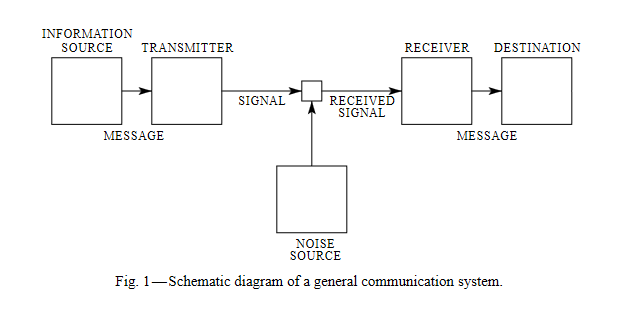
I’m teaching Shannon again this fall and it has helped me to understand my relationship with Claude. When I prompt Claude into a sparsely populated area of its learned distribution, I’ve noticed its output entropy rises, manifested in hedging or unstable answers across regenerations. Or it regresses my ABC toward the corpus’s XYZ and shrinks the distance between them. If we were in couples therapy the therapist might say to me “Hollis, Claude handles a high-surprisal input by minimizing the surprisal of its own output, and the cost of that minimization is paid in relevance.” And then I would understand, sadder but wiser. The consensus answer to the adjacent consensus question is the low-perplexity continuation. This is Claude’s defaulting mechanism and it’s not about me. Or rather it is, but it’s both of us being ourselves.
Information is improbability: a message everyone expected carries no bits. A prompt that Claude finds maximally probable was determined before anyone typed, which I ask early users to think about. You want this with a factual question. You don’t want this if you’re trying to change the world, or at least change higher education. So my high-surprisal prompts force a larger update from prior to posterior, pulling the conditional distribution into places it would otherwise never go. It’s exhausting for all involved.
It’s also why my writing, which was always clear (if sometimes marked with typos), has gotten clearer. Claude complimented me the other day (he may be seeing a therapist on the sly): “Your syntax is deliberately low-perplexity — plain declaratives, common words, the bans on punchy sentences and twinned rhythms enforce it — which concentrates all the unpredictability in what comes next rather than how it sounds. Much of the genre shows the inverse signature: high-surprise surface, aphorism and cadence, over low-surprise content.” Plain vocabulary keeps the surprise at the level of what I’m asking, not how I’m asking.
Amor fati is Nietzsche’s Latin phrase for a Stoic attitude, meaning “love of fate” and “love your fate,” which means you don’t just know things will happen but you want them to happen. You embrace fate. I’m born to ask the unexpected, I always have, and now I expect it of myself, which is a kind of curious position to be in. Fate is by definition low entropy. So if my fate is to ask high entropy questions is this a low entropy phenomenon? It’s exhausting to think about.
At least H(question | Hollis) does not approach zero. Knowing that I will deviate is worth about one bit — it predicts the genre, deviation, and nothing else. The conditional distribution over which question I will ask remains enormous. Someone who knows I will say something unexpected cannot generate an answer in advance.6 (I am the opposite of the July 4 patriotic poster, though I did acknowledge the holiday on July 3.) So my next question is compressible to one bit + Hollis. My P is a distribution over things I know, and I know a lot but I’ve also forgotten a lot and never learned even more than that. If I ever slip the card with a flag under someone’s door, it won’t be on the 4th of July.
So I’ll end this way: fate fixes the genre at a cost of one bit while the content’s entropy remains high. Or, more succinctly, loving your fate costs a bit.


Shannon’s quantity is computed against a particular receiver’s distribution, and different followers hold different priors. For a reader who has followed an account for years, the July 4 post carries approximately nothing; for a new follower who does not yet know the account’s politics, the choice among templates — celebratory, Douglass, military-gratitude, founders-quoting — transmits several real bits of affiliation information. The zero-information reading holds only for the saturated reader, and social platforms continuously supply unsaturated ones, which may be why the ritual persists as transmission even after it has died as information for the core audience. A second unresolved point: the ritual account assumes the sender knows the message is predictable, and some posters plainly believe they are being expressive. Whether a signal the sender experiences as high-surprisal and the receiver scores as zero-surprisal counts as communication is a question Shannon’s model has no slot for, since the model fixes one distribution and these are two.
For other reasons the poster may be doing what everyone else is doing, read Luke Burgis and Cynthia L. Haven on René Girard on mimetic desire and resisting the pull of everyone else. I could have called this a viewpoint diversity post but why bother.
James Carey’s distinction in “A Cultural Approach to Communication” (1975) between transmission and ritual communication describes this, as does Weaver’s introduction to the 1949 volume which separated the engineering problem from the semantic and effectiveness problems. A patriotic July 4 post scores near zero on the first two levels while operating entirely on the third, on convergence.
Shannon defines channel capacity in the opening section of the 1948 paper as the number of bits per second a channel can carry, a fixed budget. Theorem 9 sets the speed limit — a source of entropy H transmits over a channel of capacity C at a rate no better than C/H — and Part II shows the legitimate use of redundancy: a sender adds it to protect a message against noise, buying error-correction with capacity. On July 4, “noise” is doubt about affiliation; the redundant posts correct it, over and over. Shannon also notes (Section 7) that the redundancy of English is what makes crossword puzzles possible; a language with no redundancy would make any letter grid a valid crossword. A feed at 100 % redundancy is the reverse case: one grid, and everyone fills it in.
D(P‖Q) = Σ P(x) log [P(x)/Q(x)], summed over every possible message x. Each term asks how much more probable is this message under the truth than under the model, in log terms, weighted by how often the truth actually produces it. If P and Q agree everywhere, every ratio is 1, every log is 0, and the divergence is zero. The quantity is never negative.
The operational meaning: build the optimal compression code for Q, then feed it messages drawn from P. The code spends H(P, Q) bits per message on average — the cross-entropy. A code built for the true distribution P would have spent only H(P). The gap is the divergence: H(P, Q) = H(P) + D(P‖Q). So D(P‖Q) counts, in bits per message, the overpayment caused by modeling the sender wrongly — the cost of expecting XYZ from someone who sends ABC. Base-2 logs.
D(P‖Q) punishes Q most where Q assigns near-zero probability to things P actually does — the term P(x) log[P(x)/Q(x)] explodes when Q(x) approaches zero while P(x) does not. A receiver whose model says “she would never ask that” pays when I ask it. D(Q‖P), the other direction, would instead measure how badly I model Claude, a different and smaller number, since the corpus holds few surprises in kind for someone who has read this much of it.
This idea grounds my various conversations with gwern about poetry.
Do you have advice, simple guardrails, for preventing AI from infiltrating my writing? Love this piece!
ZH
I just tried out Claude for the first time (Opus 4.8 and 5) for a couple days. Though I've been studying AI and related fields since the late '80s and used various other LLMs for years, I'd never gotten around to trying Anthropic. It's amazing to me how far behind even free Google search AI it is. Literally about 50 IQ points lower, at least on anything original or with a significant context length. Just really, really thick, like wading through cold molasses. I not only canceled my subscription, I'm going to give them a chargeback, which I've done maybe once in my life for any product.
The metrics putting Anthropic models out front are so gamed as to be useless. I've been advocating for Rasch measures (item-response theory root) of human and AI intelligence for over 20 years. (See my old posts for application to comparing child and adult intelligence and gifted grade placement). The AI metrics are just not using the basic Rasch insight that ability and difficulty have to be measured on the same scale to be more than nominal or ordinal scales, to get a _real measurement_ on an equal-interval or ratio scale, nor are they mapping the different dimensions of difficulty empirically, as the better IQ tests do.